Powering Sindh: A Deep Dive into the Sindh Solar Scheme 2026 for Clean Energy
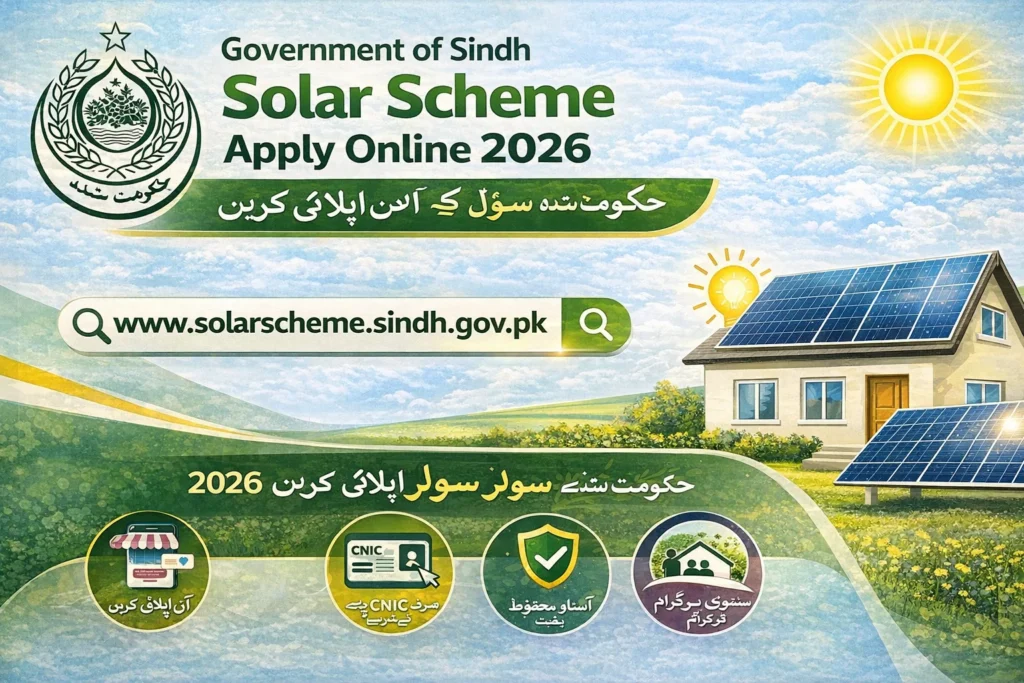
Sindh Solar Scheme Apply Online 2026 marks a pivotal initiative by the Sindh government, designed to usher in a new era of clean and sustainable energy across the province. This ambitious project, officially the Sindh Solar Scheme 2026, aims to tackle persistent issues of load shedding and unstable electricity supply, particularly in residential areas and public buildings. With an allocation of approximately 5 billion rupees, the scheme targets the installation of 200,000 solar systems, benefiting an impressive 26 lakh families province-wide.
Understanding the Sindh Solar Scheme 2026
The Sindh Solar Scheme 2026 is not merely an energy project; it’s a comprehensive strategy for environmental sustainability and socio-economic upliftment. Its primary goal is to decentralize power generation, empowering communities to become less reliant on the national grid and enjoy a consistent power supply. This move is expected to significantly reduce carbon emissions and provide long-term energy security for vulnerable populations.
The scheme’s broad scope reflects the government’s commitment to a greener future, extending beyond just households to encompass public infrastructure. This holistic approach ensures that the benefits of solar energy are widespread, supporting both individual welfare and institutional efficiency. The project demonstrates a clear vision for mitigating energy crises through renewable resources.
Core Components of the Sindh Solar Scheme
The Sindh Solar Scheme is structured around four crucial components to ensure its successful implementation and reach. Firstly, it involves the development of solar parks and the selection of private sector companies to construct large-scale power plants, laying the groundwork for increased solar capacity. This public-private partnership model is central to scaling up renewable energy infrastructure.
Secondly, the scheme focuses on installing solar systems on the rooftops and open areas of government buildings. This not only sets an example for renewable energy adoption but also reduces operational costs for public offices. Thirdly, the most impactful component involves providing free or highly affordable solar systems to low-income families, alleviating their energy burden. Finally, comprehensive training and support are integral, ensuring smooth and safe operations, promoting gender inclusivity in skill development, and maintaining high standards throughout the project’s lifecycle.
Sindh Solar Scheme Check Eligibility
Before applying for the Sindh Solar Scheme 2026, potential beneficiaries must first ascertain their eligibility. The process for a Sindh Solar Scheme Check Eligibility is designed to be straightforward and accessible. Applicants can simply type their 13-digit Computerized National Identity Card (CNIC) number and send it via SMS to 8800.
Upon sending the SMS, applicants will receive a reply confirming their eligibility status. This preliminary step helps streamline the application process by ensuring that only qualified individuals proceed to the next stage. The system aims to provide quick feedback, making it convenient for residents across Sindh to determine their application prospects.
Detailed Eligibility Criteria for the Sindh Solar Scheme
To qualify for the Sindh Solar Scheme, applicants must meet a specific set of criteria. These guidelines ensure that the benefits reach the intended audience and address the most pressing energy needs. The eligibility criteria include being a permanent resident of Sindh, residing in a rural or semi-urban area, and possessing a valid CNIC.
Furthermore, applicants must demonstrate an average electricity usage of under 100 units per month over the last six months, indicating a clear need for subsidized energy. A crucial criterion is that the applicant must not have received solar assistance through any past government scheme, ensuring equitable distribution of resources. The government aims to bring job opportunities through such initiatives, which can be found on platforms like SindhJobs.pk. These stringent but fair criteria are designed to maximize the scheme’s impact on those most in need.
Sindh Solar Scheme: Online Registration Status and Application Process
It is important to note that Sindh Solar Scheme Apply Online 2026 registration is currently not available. The application process requires physical submission to ensure thorough verification and interaction. Interested individuals must visit the Sindh Energy Department, located on the 3rd Floor, State Life Building No. 3, Karachi, to obtain an application form.
Once the form is acquired, applicants are required to fill it out accurately and attach all necessary documents before submitting it. A third party will then conduct a verification process to confirm the provided information. Upon successful verification, designated Non-Governmental Organizations (NGOs) will be responsible for the installation of the solar systems. This structured process ensures transparency and accountability throughout the application and installation phases of the Sindh Solar Scheme.
Required Documents for Sindh Solar Scheme Application
To ensure a complete and successful application for the Sindh Solar Scheme, several key documents are required. These documents are essential for verifying the applicant’s identity, residence, and energy consumption patterns. Applicants must provide a copy of their CNIC, which serves as proof of identity and permanent residency in Sindh.
Additionally, a copy of the latest electricity bill is mandatory to verify the applicant’s recent electricity usage. A verified application form, ensuring all details are correctly provided, is also required. Proof of residence, such as a domicile certificate or utility bill in the applicant’s name, and a recent passport-size photograph complete the application portfolio. In cases where more than 120,000 applications are received, a Project Monitoring Committee will make the final decision via a lucky draw, ensuring fairness.
Main Features of the Sindh Free Solar System Scheme
The Sindh Free Solar System Scheme offers a range of attractive benefits aimed at making solar energy accessible to a vast population. The scheme plans to distribute a total of 200,000 solar home systems, each typically sized between 1–3 KW, suitable for household use. This capacity is sufficient to power essential appliances, significantly reducing reliance on conventional electricity.
A major advantage of this Sindh Solar Scheme is the cost-sharing model: the government will bear 80% of the system’s cost, while families will contribute only 20%. To further ease the financial burden, the family’s contribution can be paid through installments via Sindh Bank at 0% interest. Although there is no official update on the last date, the general deadline is expected to be around February 2026. Selected districts for the scheme include vulnerable areas in Karachi, Kohistan, and desert regions.
Financial Aspects and System Specifications of the Sindh Solar Scheme
The financial model of the Sindh Solar Scheme 2026 is designed to maximize affordability and accessibility. The government’s 80% subsidy on the 1–3 KW solar systems for eligible households significantly brings down the upfront cost, making it feasible for low-income families. The remaining 20% contribution from families can be managed through interest-free installments facilitated by Sindh Bank, removing a major financial barrier.
These system specifications are tailored to meet typical household energy demands, ensuring that families can power lights, fans, and small appliances without interruption. The scheme’s focus on solar systems of 1–3 KW is a practical choice, balancing cost-effectiveness with functional utility for domestic use. The proactive approach of the Sindh Solar Scheme in selected high-need districts demonstrates a targeted effort to address specific energy deficits.
Frequently Asked Questions (FAQs)
1. What is the primary objective of the Sindh Solar Scheme 2026?
The primary objective of the Sindh Solar Scheme 2026 is to provide clean, stable, and affordable electricity to 26 lakh families and public buildings in Sindh, particularly those facing load shedding, by installing 200,000 solar systems.
2. How can I check my eligibility for the Sindh Solar Scheme?
You can check your eligibility for the Sindh Solar Scheme by typing your CNIC number and sending it via SMS to 8800. You will receive an immediate reply with your eligibility status.
3. Is online registration available for the Sindh Solar Scheme?
No, online registration is currently not available for the Sindh Solar Scheme. Applicants must visit the Sindh Energy Department in Karachi to obtain and submit their application forms physically.
4. What documents are required to apply for the Sindh Solar Scheme?
Required documents include a copy of your CNIC, your latest electricity bill, a verified application form, proof of residence, and a passport-size photograph.
5. What is the cost-sharing model and system size for the solar systems?
The government covers 80% of the cost, while families contribute 20%. This 20% can be paid in 0% interest installments via Sindh Bank. The typical system size provided is 1–3 KW for household use.
6. Which areas are prioritized under the Sindh Solar Scheme?
The scheme prioritizes specific districts including parts of Karachi, Kohistan, and various desert regions, focusing on areas with significant energy challenges.
7. What happens if too many applications are received for the Sindh Solar Scheme?
If more than 120,000 applications are received, a Project Monitoring Committee will make the final selection through a transparent lucky draw process.
Conclusion
The Sindh Solar Scheme 2026 represents a commendable stride towards achieving energy independence and environmental sustainability for the province. By targeting 26 lakh families with 200,000 solar systems and a substantial investment of 5 billion rupees, the scheme promises to alleviate chronic power shortages and improve the quality of life for countless residents. The carefully designed eligibility criteria, a robust application process, and significant government subsidy, coupled with interest-free financing, make this scheme accessible to the most deserving households. While specific details like the application deadline might still evolve, the overarching commitment to a clean energy future is clear. Successful implementation of the Sindh Solar Scheme will not only provide stable electricity but also foster economic growth, reduce carbon footprint, and empower communities across Sindh, transforming their daily lives and setting a precedent for future renewable energy initiatives.