Sindh Solar Panel Installation Scheme 2026: A Complete Guide to the Upcoming Solar Program
The Sindh Solar Panel Installation Scheme 2026 emerges as a vital initiative in a region grappling with persistent energy challenges. Electricity prices in Pakistan continue to rise every year, and load shedding remains a significant hurdle in many areas of Sindh. Because of this, solar energy is no longer a luxury; it has transitioned into a necessity for countless households. This government-supported solar program aims to help families shift toward clean, affordable, and reliable energy. This article will explain the growing demand for solar energy, detail the Sindh Solar Energy Project (SSEP) supported by the World Bank, outline application procedures, and clarify what to expect as the scheme rolls out soon.
Growing Demand for Solar Energy in Sindh
Over the past few years, solar power adoption in Pakistan has surged rapidly. Rising electricity tariffs, frequent outages, and advancements in solar technology have collectively driven thousands of households toward renewable energy solutions. Pakistan’s solar capacity has expanded notably, with rooftop solar installations flourishing nationwide as families seek long-term savings and greater energy independence. In Sindh specifically, solar energy offers several compelling advantages, including abundant sunlight throughout the year, significantly reduced electricity bills, and reliable backup power during grid outages. It also provides environmentally friendly energy generation and independence from volatile fuel costs.
Rural and low-income communities are often the most severely affected by electricity shortages. Consequently, the Sindh government has introduced large-scale solar initiatives to improve energy access and stability across these vulnerable populations. These initiatives are crucial for uplifting living standards.
The Sindh Solar Energy Project (SSEP) – A World Bank Supported Initiative
The Sindh Solar Energy Project (SSEP) stands as one of the largest renewable energy programs within the province, developed by the Government of Sindh with substantial financial backing from the World Bank. This significant project received $100 million in financing, specifically allocated to expand solar power generation and enhance electricity access throughout Sindh. The SSEP’s comprehensive approach underscores the province’s commitment to sustainable energy development.
The project articulates three major objectives to achieve its ambitious goals. Firstly, it focuses on utility-scale solar power, which includes the development of large solar parks, prominently featuring a 400 MW solar facility in the Jamshoro district. Secondly, it targets distributed solar generation, involving solar installations on public buildings in major cities like Karachi and Hyderabad. Thirdly, and most critically for the upcoming scheme, it focuses on household solar systems, aiming to provide affordable or even free solar home systems to rural and low-income families. Officials anticipate this initiative will provide solar energy access to approximately 200,000 households, thereby helping communities drastically reduce electricity costs and improve their overall living conditions. For career opportunities in this growing sector, many turn to SindhJobs.pk.
Key Details of the Sindh Solar Panel Installation Scheme 2026
The upcoming Sindh Solar Panel Installation Scheme 2026 is primarily designed to assist households with limited electricity consumption and low income. This targeted approach ensures that the benefits reach those who need them most. The scheme aims to make clean energy accessible, thereby alleviating the financial burden of traditional electricity and enhancing energy security.
Eligibility Criteria for Sindh’s Solar Program
To qualify for the Sindh Solar Panel Installation Scheme 2026, applicants must meet specific basic eligibility criteria. You may be eligible if you are a permanent resident of Sindh, reside in rural or semi-urban areas, possess a valid CNIC, and currently consume less than 100 electricity units per month. Furthermore, households that have not previously received a government-sponsored solar system are prioritized. This program is thoughtfully structured to support families struggling with high electricity bills or those lacking reliable grid power.
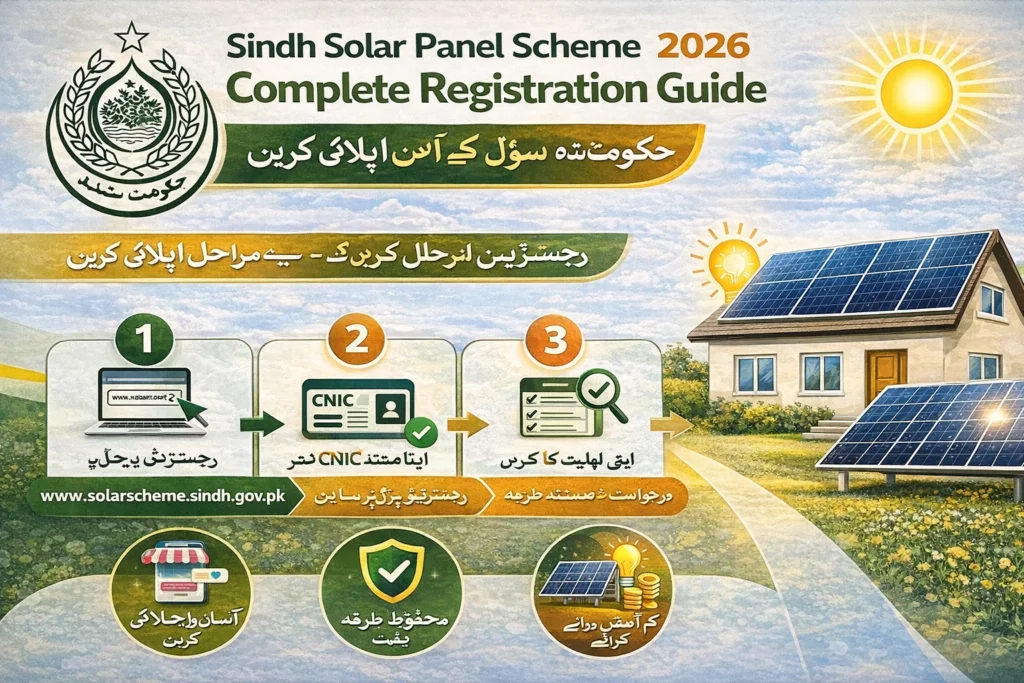
How to Apply for the Sindh Solar Panel Scheme
The application process for the Sindh Solar Panel Installation Scheme 2026 is expected to be streamlined and accessible to ensure maximum participation. The process will likely involve several straightforward steps. Applicants should first visit the official solar scheme portal or a designated local government office to obtain the necessary application forms. They will then need to fill out the application form accurately, providing required details such as CNIC information, a copy of their recent electricity bill, and contact details.
Upon completion, applicants must upload or submit all supporting documents. After submission, a tracking reference number will be provided for follow-up. In certain instances, verification from local authorities or Union Council offices may be required prior to final approval, ensuring the legitimacy of applicants for the upcoming solar program.
What to Expect Under the Sindh Solar Program 2026
Selected households under the Sindh Solar Panel Installation Scheme 2026 are expected to receive a comprehensive Solar Home System. These systems are typically designed to power essential household appliances and significantly reduce dependency on grid electricity. A standard package might include durable solar panels, a reliable battery system for energy storage, a DC fan, and energy-efficient LED bulbs. Importantly, essential wiring and professional installation support will also be provided to ensure the system’s optimal functionality.
The Anticipated Rollout of the Solar Panel Installation Scheme
The Sindh government has substantially expanded its solar distribution plans, with a strategic goal of delivering solar systems to hundreds of thousands of families as part of its broader renewable energy transition strategy. The Sindh Solar Panel Installation Scheme 2026 rollout is expected to increase access to clean electricity, significantly reduce energy poverty in rural areas, and lower household electricity expenses. It is also designed to actively promote the widespread adoption of sustainable energy practices throughout the province.
Applications are anticipated to open in phases, therefore, early registration is highly recommended once official announcements are publicly released. Interested individuals can also look for updates on government initiatives through platforms like SindhJobs.pk.
Why the Sindh Solar Panel Installation Scheme Matters
The Sindh Solar Panel Installation Scheme 2026 is more than just a subsidy program; it represents a fundamental shift in energy policy and societal well-being. It signifies a decisive move toward clean energy adoption, offering tangible economic relief for households burdened by rising electricity costs. Furthermore, it champions climate-friendly development, aligning Sindh with global efforts to combat climate change, and contributes to long-term energy stability. With robust support from international partners like the World Bank, Sindh is actively progressing toward a future where solar power becomes a primary energy source rather than merely an alternative.
FAQs (Frequently Asked Questions)
What is the primary goal of the Sindh Solar Panel Installation Scheme 2026?
The main goal is to help households, particularly low-income and rural families, shift to clean, affordable, and reliable energy by providing government-supported solar home systems, thereby reducing electricity bills and combating load shedding.Who is funding the Sindh Solar Energy Project (SSEP)?
The SSEP is developed by the Government of Sindh with significant financial support from the World Bank, which has provided $100 million in financing.What are the key eligibility criteria for the 2026 solar scheme?
Applicants must be permanent residents of Sindh, live in rural or semi-urban areas, possess a valid CNIC, consume less than 100 electricity units per month, and not have previously received a government solar system.What kind of solar system will households receive under the scheme?
Selected households are expected to receive a Solar Home System typically including solar panels, a battery system, a DC fan, LED bulbs, and basic wiring with installation supportHow many households does the Sindh Solar Energy Project aim to benefit?
The initiative aims to provide solar energy access to approximately 200,000 households across Sindh.When can I apply for the Sindh Solar Panel Installation Scheme 2026?
Applications are expected to open in phases closer to 2026. It is advisable to monitor official government announcements for precise dates and application procedures.Is there a cost involved for the beneficiaries of this solar system?
The scheme aims to provide affordable or even free solar home systems to eligible rural and low-income families, making clean energy accessible without significant financial burden.
Conclusion
The Sindh Solar Panel Installation Scheme 2026 marks a pivotal moment for energy security and sustainability in the province. By leveraging the vast potential of solar power and backed by substantial international support from the World Bank, this initiative promises a brighter, more stable future for hundreds of thousands of families. The scheme’s comprehensive approach, from large-scale power generation to individual household systems, addresses the critical challenges of rising electricity costs and persistent load shedding. It is set to deliver significant economic relief, foster climate-friendly development, and ensure long-term energy stability, positioning Sindh as a leader in renewable energy adoption within Pakistan. As the scheme prepares for its rollout, it stands as a testament to a commitment towards a cleaner, more equitable energy landscape.