Demand Rises for Supply Chain Officer / Executive Roles in Karachi’s Textile Sector
The role of a Supply Chain Officer / Executive is becoming increasingly vital in Pakistan’s dynamic industrial landscape, particularly within the bustling metropolis of Karachi. A recent opening highlights this growing demand, seeking immediate joiners for a crucial position in the textile and garments industry located in key industrial zones like Korangi and Landhi. This opportunity underscores the strategic importance of efficient supply chain management in today’s competitive market, where timely delivery and cost-effectiveness are paramount.
The Critical Need for a Supply Chain Officer / Executive Role
A Supply Chain Officer/Executive plays a fundamental role in ensuring the smooth flow of goods from raw materials to the end consumer. In the textile and garments industry, this encompasses everything from sourcing fabric and accessories to managing production schedules, logistics, and distribution. The efficiency of this process directly impacts a company’s profitability and reputation. With global supply chains facing increasing complexities due to various economic and geopolitical factors, skilled professionals in this domain are more sought after than ever.
Navigating Complexities as a Supply Chain Officer
The responsibilities of a Supply Chain Officer often include inventory management, vendor negotiations, optimizing logistics, and ensuring compliance with international trade regulations. They act as a central nervous system for the company’s operational flow, minimizing disruptions and maximizing efficiency. In Karachi, a major hub for textile exports, such roles are instrumental in connecting local production capabilities with international markets, contributing significantly to the national economy.
Key Qualifications for a Supply Chain Executive
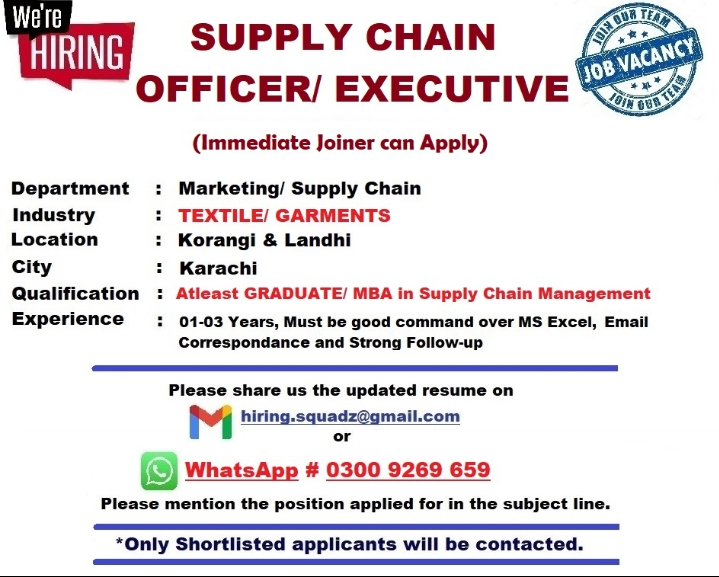
Candidates aspiring to become a Supply Chain Executive are typically expected to possess a strong academic background combined with practical experience. The current opening in Karachi specifically targets individuals with at least a Graduate degree, with preference given to those holding an MBA in Supply Chain Management. This academic foundation equips professionals with the theoretical knowledge and strategic thinking necessary to tackle complex supply chain challenges. Additionally, a command over MS Excel is non-negotiable, given its widespread use in data analysis, inventory tracking, and reporting within the supply chain domain.
Essential Skills for a Supply Chain Officer
Beyond formal qualifications, particular skills are crucial for success as a Supply Chain Officer. Email correspondence skills are vital for effective communication with suppliers, logistics partners, and internal departments. Strong follow-up skills are equally important to ensure deadlines are met, orders are processed correctly, and potential issues are identified and resolved proactively. The fast-paced nature of the garment industry, especially in manufacturing hubs like Landhi and Korangi, further emphasizes the need for an organized and responsive professional. This role, often found on platforms like SindhJobs.pk, demands meticulous attention to detail and a proactive approach.
The Textile / Garments Industry: A Dynamic Environment
The textile and garments industry in Pakistan, particularly in Karachi, is a cornerstone of the country’s economy, contributing significantly to exports and employment. According to the Pakistan Bureau of Statistics, textile and clothing exports typically account for a substantial portion of the nation’s total exports. This continuous growth and emphasis on global competitiveness mean companies are constantly seeking ways to optimize their operations, with the supply chain at its heart. Professionals joining this sector as a Supply Chain Officer / Executive will find themselves in a dynamic and evolving environment, offering ample opportunities for learning and career progression.
Applying for the Supply Chain Officer / Executive Position
Prospective candidates for the Supply Chain Officer / Executive role are encouraged to apply promptly, especially those who can join immediately. Companies understand the urgency of filling critical positions to maintain operational efficiency. The application process is straightforward: candidates should share their updated resumes via email to hiring.squadz@gmail.com or WhatsApp at 0300-9269659. It is crucial to mention the position applied for in the subject line to ensure proper screening and timely consideration. This systematic approach ensures that only the most suitable applicants are shortlisted, streamlining the hiring process for both the employer and the candidate. Many such opportunities can be found on credible resources like SindhJobs.pk.
Career Outlook for a Supply Chain Officer in Karachi
The career path for a Supply Chain Officer in a city like Karachi, within the robust textile and garments industry, holds significant potential. With experience, professionals can advance to roles such as Senior Supply Chain Executive, Supply Chain Manager, or Director of Logistics. The skills honed in this foundational role, from negotiation to strategic planning and problem-solving, are highly transferable and valuable across various industries. This particular position, with its 01-03 years of experience requirement, serves as an excellent stepping stone for ambitious individuals looking to build a career in supply chain management.
Conclusion
The demand for a skilled Supply Chain Officer / Executive in Karachi’s vibrant textile and garments industry reflects a broader trend of companies prioritizing efficient and resilient supply chains. For immediate joiners with the right qualifications – a graduate or MBA in Supply Chain Management, paired with strong MS Excel, email, and follow-up skills – this opportunity presents a significant chance to contribute to a vital sector. Successful candidates will play a crucial role in optimizing operations, enhancing competitiveness, and driving growth, solidifying their impact on both the company and the broader economic landscape.
FAQs (Frequently Asked Questions)
What is the primary function of a Supply Chain Officer / Executive in the textile industry?
A Supply Chain Officer/Executive manages the entire flow of goods, from sourcing raw materials (fabric, accessories) to managing production, inventory, logistics, and distribution to ensure efficient and timely delivery of finished garments.What qualifications are essential for this Supply Chain Officer position?
Candidates must be at least a Graduate, with an MBA in Supply Chain Management preferred. Additionally, 1-3 years of experience, strong command of MS Excel, email correspondence skills, and robust follow-up abilities are required.What specific skills are highly valued for a Supply Chain Executive?
Key skills include proficiency in MS Excel for data analysis, strong communication through email, excellent follow-up for task completion, negotiation abilities, and problem-solving to address logistical challenges.Why is an “Immediate Joiner” preferred for this Supply Chain Officer role?
Companies often seek immediate joiners for critical roles like Supply Chain Officer/Executive to promptly fill operational gaps, maintain supply chain continuity, and avoid disruptions in production and delivery schedules. The textile industry often has tight deadlines.What are the typical working locations for this Supply Chain Executive role in Karachi?
The specified working locations are in the industrial areas of Korangi and Landhi, which are key hubs for textile and garment manufacturing in Karachi.How can interested candidates apply for this Supply Chain Officer / Executive opening?
Applicants should send their updated resume via email to hiring.squadz@gmail.com or WhatsApp to 0300-9269659. It is crucial to mention the position applied for in the subject line of the email/message.What are the career growth prospects for a Supply Chain Officer in the textile industry?
Starting as a Supply Chain Officer/Executive, individuals can progress to roles like Senior Supply Chain Executive, Supply Chain Manager, Logistics Manager, or even Director of Supply Chain Management, gaining valuable experience and expertise along the way.