Sindh Livestock Scheme 2026: A Guide to Free Animal Registration and Rural Empowerment
The Sindh Livestock Scheme 2026 is emerging as a critical government initiative designed to bolster rural economies and alleviate poverty within the province. This program, conceptualized by the Sindh government, aims to provide tangible economic support by distributing free animals such as goats, cows, and buffaloes to eligible small-scale farmers and households. The scheme reflects a strategic effort to empower rural communities, particularly vulnerable segments, and enhance the overall productivity of the livestock sector, which forms a significant component of Sindh’s economy.
Livestock farming in Sindh plays a crucial role in household income generation and food security, especially in remote areas. The introduction of the Sindh Livestock Scheme 2026 recognizes the challenges faced by smallholders, including limited access to capital for purchasing quality livestock and inadequate training resources. By offering free animals, the government intends to provide a pathway for families to increase their assets and achieve sustainable livelihoods.
Eligibility Criteria for Participation in Sindh Livestock Scheme 2026
To ensure the benefits reach those most in need, a strict set of eligibility criteria for the Sindh Livestock Scheme 2026 has been established. The scheme specifically targets small-scale farmers and individuals from low-income families, ensuring that resource allocation is directed toward those who can benefit most significantly from the support.
Applicants must be verifiable residents of Sindh province. The program prioritizes individuals who derive a substantial portion of their income from agriculture or farming activities. This focus ensures that the scheme’s resources directly strengthen the agricultural sector and reduce the financial burden on farming families.
Prioritizing Vulnerable Groups in Sindh Livestock Scheme 2026
A key feature of the Sindh Livestock Scheme is its strong focus on empowering marginalized groups. Priority consideration is given to women, widows, and unemployed individuals directly engaged in or seeking involvement in livestock farming. This targeted approach aims not only to provide economic assistance but also to promote gender equality and financial independence among rural women.
By providing free livestock to female-headed households, the scheme facilitates greater participation of women in economic decision-making and property ownership, which historically has been challenging in rural settings. This strategic inclusion aligns with broader government objectives to improve social equity and a balanced economic development.
Economic and Social Benefits of the Sindh Livestock Scheme 2026
The benefits provided by an initiative like the Sindh Livestock Scheme 2026 extend far beyond the mere distribution of animals. The project aims to stimulate a cycle of economic growth for beneficiary families, starting with improved food security through access to milk and meat products.
The primary objective is to empower beneficiaries to breed and sell their livestock, turning the initial grant into a sustainable source of income. This creates an economic safety net, allowing families to manage financial shocks and invest in other aspects of their lives, such as health and education.
Adding Training and Financial Support for Sustainable Farming
To maximize the impact of the free animal distribution, comprehensive training and technical support are integrated into the Sindh Livestock Scheme 2026. Beneficiaries receive education in animal husbandry, nutrition, disease prevention, and best practices for managing livestock effectively.
The training ensures that recipients possess the skills necessary to keep their animals healthy and productive. Additionally, the scheme may offer financial assistance or subsidies for feed and veterinary care, further reducing the costs associated with initial livestock ownership. This bundled approach helps ensure the longevity and success of the scheme for participating families.
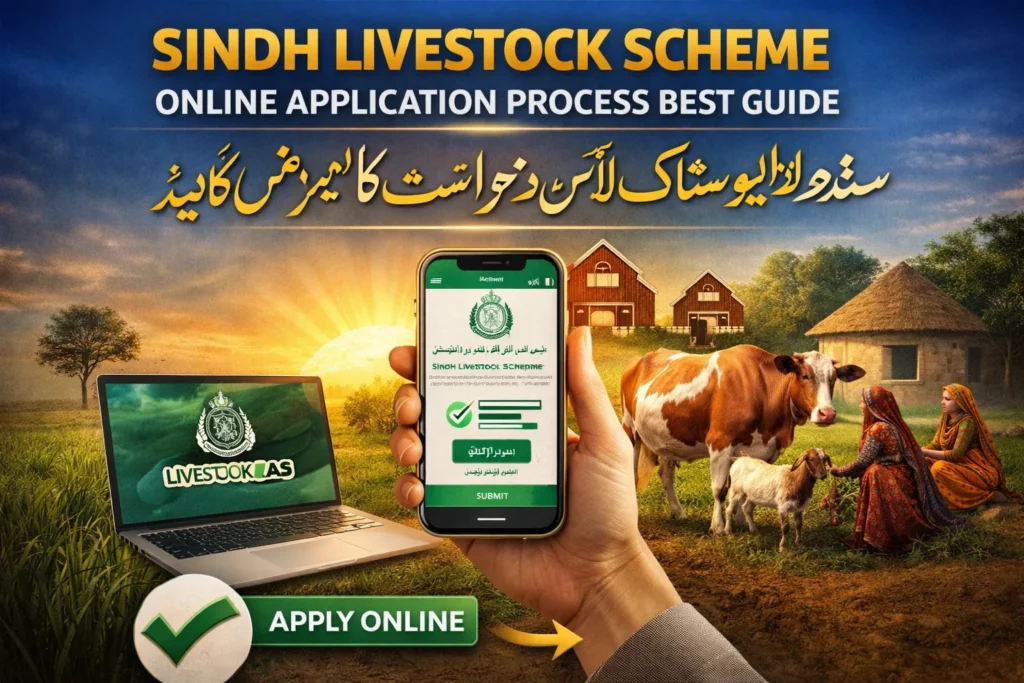
Step-by-Step Guide: How to Apply for Free Animals Registration
Registering for the Sindh Livestock Scheme 2026 requires careful adherence to the official application process. The application system is designed for accessibility to ensure all eligible residents can apply easily through official channels. The process below outlines the steps necessary for free animals registration.
Step 1: Accessing the Official Application Portal
The first step for applicants is to visit the designated official website of the Sindh Livestock & Dairy Development Department. It is crucial to use only official government portals or verified district offices to avoid fraudulent activities. Applicants should be wary of third-party websites or individuals claiming to facilitate faster registration for a fee.
Once on the portal, applicants must locate the specific registration link for the Sindh Livestock Scheme 2026. The website will provide detailed instructions and necessary forms for initial data collection. While checking for government schemes, individuals often turn to resources like SindhJobs.pk, which provides updates on various opportunities, but official scheme registration must always occur on government sites.
Step 2: Completing the Free Animals Registration Form
The second phase involves filling out the application form with accurate personal and financial details. Applicants must provide their full name, CNIC (Computerized National Identity Card) number, current physical address, and contact information. The form requires details about the applicant’s current livestock ownership status, farming experience, and total household income.
Ensure all fields are completed accurately, as discrepancies or incomplete information can lead to rejection during the verification process. Applicants must also declare whether they have previously received benefits from similar government schemes.
Step 3: Uploading Required Documentation
Along with the application form, several documents must be attached to verify eligibility for the Sindh Livestock Scheme 2026. The standard required documents typically include: a copy of the valid CNIC, proof of residence (such as a utility bill or domicile certificate), and an income certificate for low-income verification.
These documents are essential for establishing identity and residency in Sindh. Applicants are strongly advised to prepare digital copies of all required documents beforehand to ensure a swift uploading process.
Step 4: Verification and Approval Process
Following submission, government officials initiate a verification process for the Sindh Livestock Scheme 2026 applications. This process often includes cross-referencing information against official databases and, in some cases, conducting physical field surveys to assess the applicant’s farming capacity and verify their low-income status. The verification phase often takes several weeks and aims to ensure that the free animals are allocated to genuine beneficiaries.
Once verified and approved, successful applicants will receive notification regarding the collection or delivery of their livestock, along with information about mandatory training sessions.
FAQs About the Sindh Livestock Scheme 2026
Q: Who is eligible for the free animals?
A: To be eligible, applicants must be residents of Sindh province, categorized as small-scale farmers or from low-income households. Priority is specifically given to women, widows, and unemployed individuals involved in livestock farming.
Q: What type of animals are provided under the scheme?
A: The scheme typically provides animals such as goats, cows, and buffaloes, depending on availability and the specific requirements of the program phase.
Q: Is there any cost associated with an application?
A: No, the registration process for the Sindh Livestock Scheme 2026 is free of charge. Applicants should avoid anyone requesting fees for an application, as this indicates fraudulent activity.
Q: Do beneficiaries receive training in animal care?
A: Yes, training sessions in best practices for animal husbandry, feeding, and disease management are typically provided to ensure beneficiaries can effectively manage their new livestock.
Q: Will I receive financial assistance for feed or veterinary care?
A: While the primary benefit is the free animals, additional financial assistance or subsidies for feed, vaccination, and veterinary care may be provided as part of the total support package.
Q: How long does the verification process take?
A: The verification process duration varies depending on the number of applications received but generally takes several weeks as government officials review documents and conduct field visits to confirm eligibility.
Conclusion
The Sindh Livestock Scheme 2026 represents a significant commitment from the government toward rural development and poverty reduction in Sindh. By providing free animals and essential training, the program directly empowers small-scale farmers and underprivileged families, turning a basic agricultural practice into a pathway for economic stability and growth. For eligible residents, following a structured registration guide and preparing all necessary documentation is crucial to ensure successful access to this government assistance, strengthening the agricultural sector and building more resilient communities across the province.