Sindh Livestock Scheme 2026 Online Registration Process Complete Guide Here
Sindh Livestock Scheme 2026 – Free Animals Registration Guide is the cornerstone of the provincial government’s strategy to alleviate poverty and boost the rural economy. By providing essential livestock to marginalized households, the administration aims to create sustainable self-employment opportunities across the province. For those searching for reliable information on portal navigation, resources like SindhJobs.pk often highlight such developmental programs to keep the public informed about current governmental assistance initiatives.
Understanding the Eligibility Criteria for the Sindh Livestock Scheme 2026 – Free Animals Registration Guide
To ensure that the Sindh Livestock Scheme 2026 – Free Animals Registration Guide achieves its intended social impact, specific criteria have been established. The initiative primarily targets small-scale farmers and rural residents who possess a verified domicile of the Sindh province. Eligibility is determined by socioeconomic status, with a clear focus on supporting low-income families who have traditionally relied on subsistence farming.
Officials emphasize that priority is given to specific vulnerable groups, including households headed by women, widows, and unemployed youth. By targeting these demographics, the government seeks to foster gender inclusion and provide a stable income source for those most affected by economic fluctuations. To stay updated on the latest documentation requirements, applicants frequently cross-reference government announcements with local portals like SindhJobs.pk.
Core Benefits Provided by the Sindh Livestock Scheme 2026 – Free Animals Registration Guide
The primary benefit of the Sindh Livestock Scheme 2026 – Free Animals Registration Guide is the direct provision of livestock, including goats, cows, and buffaloes. According to data from the Sindh Livestock and Dairy Development Department, expanding the livestock base is essential to increasing milk and meat production within the region. This influx of resources helps families build long-term assets that generate daily income.
Beyond the physical distribution of animals, the scheme includes a comprehensive support framework. Beneficiaries receive training in modern animal husbandry techniques, including nutrition, preventative healthcare, and shelter management. This educational component ensures that the livestock remain healthy and productive, thereby maximizing the return on investment for both the beneficiaries and the provincial economy.
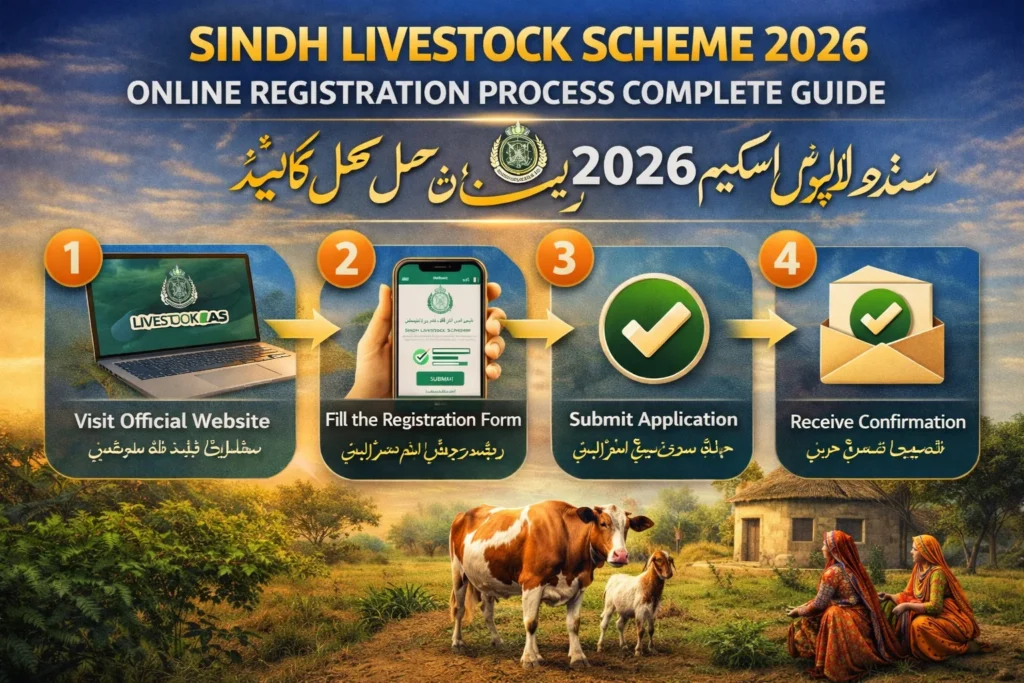
Step-by-Step Registration Process for the Sindh Livestock Scheme 2026 – Free Animals Registration Guide
Navigating the Sindh Livestock Scheme 2026 – Free Animals Registration Guide requires attention to detail. Applicants must first visit the official portal managed by the Sindh Livestock & Dairy Development Department. It is crucial to use only the official government domain to safeguard personal information. For additional news regarding the rollout of these services, many citizens utilize SindhJobs.pk as a secondary resource for locating official links.
Once on the portal, users must complete a digital application form. This form requires accurate input of Name, CNIC, contact information, and residential address. Documentation is a vital pillar of the Sindh Livestock Scheme 2026 – Free Animals Registration Guide; applicants must upload clear copies of their CNIC, proof of residency, and, where applicable, income certificates. Following submission, a tracking number is generated, which is essential for checking the status of the request.
Verification and Delivery Protocols of the Sindh Livestock Scheme 2026 – Free Animals Registration Guide
The verification stage of the Sindh Livestock Scheme 2026 – Free Animals Registration Guide is rigorous to ensure transparency. Government representatives conduct field visits or document audits to confirm that applicants truly belong to the underserved categories described in the policy. This oversight helps prevent the misuse of public funds and ensures that the animals reach those who need them most.
After an application successfully passes the vetting process, the department notifies the individual regarding the distribution schedule. The government officials involved in the program have noted that the goal is to distribute thousands of heads of livestock annually to stabilize the rural agricultural market. Consistent adherence to the protocol outlined in the Sindh Livestock Scheme 2026 – Free Animals Registration Guide is the surest path to successful enrollment.
Frequently Asked Questions (FAQs)
1. Who is eligible for the Sindh Livestock Scheme 2026?
The scheme is open to residents of Sindh who are small-scale farmers or from low-income families, with priority given to women, widows, and unemployed individuals.
2. Can I apply for the scheme offline?
The government encourages using the official online portal for the Sindh Livestock Scheme 2026 to ensure transparency and faster processing.
3. What documents are required for registration?
You will need your valid CNIC, proof of residence in Sindh, and income documentation to verify your eligibility status.
4. Will I receive training after receiving the free animals?
Yes, the scheme includes mandatory or optional training sessions on animal husbandry and health to ensure the survival and productivity of the livestock.
5. How often can I check my application status?
Once you submit your application through the official portal, you can use your provided tracking number to check for updates regularly.
6. Is there a charge to apply for this scheme?
No, registration for the Sindh Livestock Scheme 2026 is entirely free of cost. Be wary of any unauthorized third parties asking for money to submit an application.
Conclusion
The Sindh Livestock Scheme 2026 – Free Animals Registration Guide acts as a vital bridge between government resources and the rural population. By providing a structured pathway for acquiring livestock, the program directly contributes to poverty reduction and the self-sufficiency of small-scale farmers. As implementation gathers pace, adherence to these guidelines will ensure that families across the province can secure a brighter, more sustainable future through improved agricultural productivity.